
Degree inflation refers to the phenomenon where higher educational qualifications are increasingly required for jobs that previously did not necessitate such credentials. This trend has emerged as a response to the evolving demands of the labor market, where employers often seek candidates with advanced degrees to ensure a competitive edge. The roots of degree inflation can be traced back to the late 20th century, when a college degree began to be viewed not merely as a marker of educational achievement but as a prerequisite for entry into many professions.
As more individuals pursued higher education, the value of a bachelor’s degree diminished, prompting employers to raise their expectations and seek candidates with master’s degrees or even doctorates for positions that once required only an undergraduate education. The implications of degree inflation are profound and multifaceted. On one hand, it reflects a society that values education and recognizes its importance in fostering a skilled workforce.
On the other hand, it raises questions about the accessibility and affordability of higher education, as well as the overall value of degrees in the job market. As the demand for higher qualifications continues to escalate, it becomes essential to examine the broader consequences of this trend on various stakeholders, including students, employers, and educational institutions.
The Effects of Degree Inflation on Job Market
The job market has undergone significant transformations due to degree inflation, leading to a mismatch between job requirements and the qualifications of available candidates. Many positions that once required only a high school diploma or an associate degree now demand a bachelor’s degree or higher. This shift has created a competitive landscape where job seekers must possess advanced degrees to stand out, even for roles that do not necessarily require such qualifications.
For instance, administrative positions that previously accepted candidates with a high school diploma are now often filled by individuals with bachelor’s degrees in fields like business administration or communications. This escalation in educational requirements can lead to an oversaturation of qualified candidates for certain roles, resulting in underemployment. Many graduates find themselves in jobs that do not utilize their full skill set or educational background, leading to frustration and disillusionment.
For example, a recent graduate with a master’s degree in sociology may end up working in retail or customer service, roles that do not require such advanced qualifications. This phenomenon not only affects individual job seekers but also has broader implications for the economy, as it can lead to decreased productivity and innovation when highly educated individuals are not engaged in work that matches their capabilities.
The Impact of Degree Inflation on Student Debt
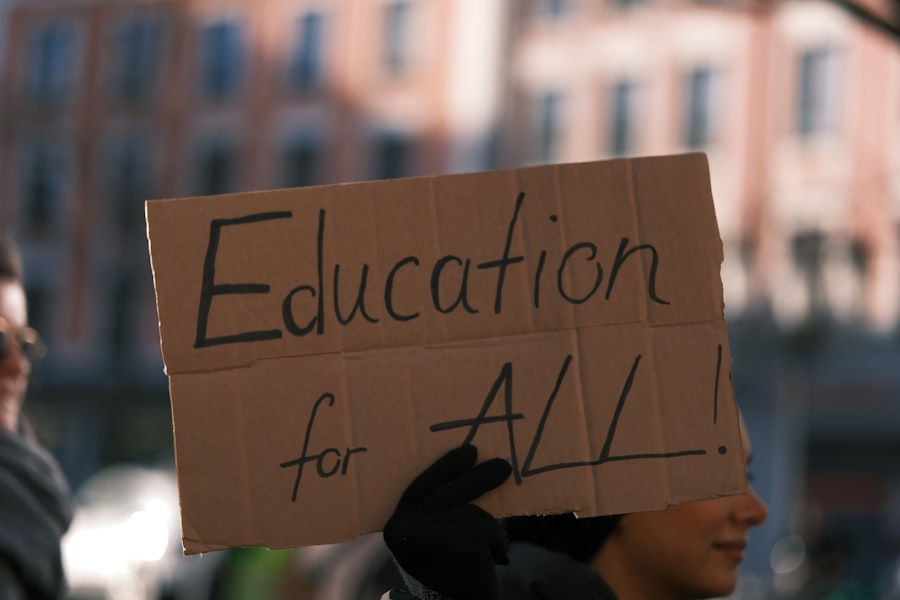
As degree inflation continues to shape the educational landscape, student debt has become an increasingly pressing issue. The rising costs of obtaining higher education have forced many students to take on significant financial burdens in pursuit of advanced degrees. According to the Federal Reserve, student loan debt in the United States surpassed $1.7 trillion in 2021, with millions of borrowers struggling to repay their loans.
This financial strain is exacerbated by degree inflation, as students feel compelled to pursue additional qualifications to remain competitive in the job market. The relationship between degree inflation and student debt is particularly concerning for those from lower-income backgrounds who may already face financial barriers to education. As the expectation for higher degrees grows, these students may find themselves trapped in a cycle of debt without guaranteed job prospects that justify their investment.
For instance, a student who borrows $50,000 to obtain a master’s degree in education may discover that entry-level teaching positions offer salaries that do not adequately cover their loan payments. This situation can lead to long-term financial instability and limit opportunities for upward mobility.
Degree Inflation and the Devaluation of Higher Education
The phenomenon of degree inflation has contributed significantly to the devaluation of higher education itself. As more individuals obtain advanced degrees, the distinction between those with bachelor’s degrees and those with master’s degrees becomes less pronounced. This dilution of value can lead to skepticism regarding the worth of higher education among employers and society at large.
When advanced degrees become commonplace, they lose their status as markers of exceptional achievement and expertise. Moreover, this devaluation can create a paradox where individuals feel pressured to pursue even higher levels of education—such as doctoral degrees—simply to differentiate themselves from their peers. This trend can lead to an endless cycle of educational attainment without corresponding increases in job opportunities or salary potential.
For example, in fields like psychology or social work, practitioners may feel compelled to obtain a doctorate despite many positions being adequately filled by those with master’s degrees. This not only places additional financial burdens on students but also raises questions about the true value of such advanced qualifications in the workforce.
The Role of Degree Inflation in Widening Socioeconomic Disparities
| Metric | Description | Data/Value | Source/Year |
|---|---|---|---|
| Percentage of U.S. adults with a bachelor’s degree or higher | Proportion of adults aged 25 and older holding at least a bachelor’s degree | 38% | U.S. Census Bureau, 2022 |
| Increase in bachelor’s degree holders since 2000 | Growth in the number of bachelor’s degree holders over two decades | +50% | National Center for Education Statistics (NCES), 2021 |
| Underemployment rate for recent graduates | Percentage of recent graduates working in jobs that do not require a degree | 41% | Federal Reserve Bank of New York, 2023 |
| Average starting salary for bachelor’s degree holders | Median annual starting salary for new graduates with a bachelor’s degree | 47,000 | National Association of Colleges and Employers (NACE), 2023 |
| Tuition inflation rate (annual average) | Yearly increase in college tuition fees adjusted for inflation | 3.5% | College Board, 2023 |
| Student loan debt (average per borrower) | Average outstanding student loan debt per borrower | 30,000 | Federal Reserve, 2023 |
| Employer preference for degrees in job postings | Percentage of job listings requiring a bachelor’s degree even for entry-level roles | 65% | Burning Glass Technologies, 2022 |
| Perceived value of college education (survey) | Percentage of adults who believe a college degree is worth the cost | 55% | Pew Research Center, 2023 |
Degree inflation has significant implications for socioeconomic disparities within society. As educational requirements escalate, individuals from lower-income backgrounds may find it increasingly difficult to access higher education opportunities. The rising costs associated with obtaining advanced degrees can create barriers that disproportionately affect marginalized communities, perpetuating cycles of poverty and limiting social mobility.
For instance, students from affluent families may have greater access to resources such as tutoring, test preparation, and college counseling services that enhance their chances of admission into prestigious institutions. In contrast, students from disadvantaged backgrounds may lack these resources and face additional challenges such as inadequate school funding or limited access to advanced coursework. As a result, they may be less likely to pursue higher education altogether or may accumulate significant debt in their pursuit of degrees that do not guarantee employment opportunities.
This widening gap between socioeconomic classes can lead to increased inequality and social stratification, as those with advanced degrees secure better-paying jobs while others struggle to make ends meet.
Degree Inflation and the Quality of Education

The pressure created by degree inflation can also impact the quality of education itself. As institutions strive to meet the demands for higher qualifications, there is a risk that they may prioritize quantity over quality in their programs. For example, universities may expand their graduate programs without adequately investing in faculty resources or curriculum development, leading to diluted educational experiences for students.
This can result in graduates who possess degrees but lack the practical skills and knowledge necessary for success in their chosen fields. Furthermore, degree inflation can create an environment where academic rigor is compromised in favor of meeting enrollment targets or generating revenue through tuition fees. Institutions may lower admission standards or offer programs that cater more to market demand than to genuine educational value.
This trend raises concerns about whether graduates are truly prepared for the complexities of their professions or if they are simply products of an inflated educational system.
Addressing Degree Inflation: Potential Solutions and Strategies
Addressing degree inflation requires a multifaceted approach involving collaboration among educational institutions, employers, policymakers, and students themselves. One potential solution is for employers to reassess their hiring practices and consider alternative qualifications beyond formal degrees. Skills-based hiring practices that prioritize relevant experience and competencies over specific educational credentials could help bridge the gap between job seekers and available positions.
Additionally, educational institutions could focus on developing programs that emphasize practical skills and real-world applications rather than solely academic achievements. By fostering partnerships with industries and incorporating experiential learning opportunities such as internships or co-op programs into curricula, institutions can better prepare students for the demands of the job market while reducing reliance on advanced degrees as a measure of competence. Policymakers also play a crucial role in addressing degree inflation by advocating for affordable access to higher education and supporting initiatives that promote vocational training and alternative pathways into careers.
By investing in community colleges and technical training programs, governments can provide viable options for individuals seeking employment without incurring significant debt.
Navigating the Impact of Degree Inflation on Education Value
Navigating the complexities of degree inflation requires a collective effort from all stakeholders involved in education and employment. As society grapples with the implications of rising educational expectations, it is essential to foster an environment where diverse pathways to success are recognized and valued. By prioritizing skills over credentials and promoting equitable access to quality education, we can work towards mitigating the adverse effects of degree inflation while ensuring that higher education retains its significance as a tool for personal and professional growth.
FAQs
What is degree inflation?
Degree inflation refers to the phenomenon where higher educational qualifications are increasingly required for jobs that previously did not require them. This leads to a situation where more people obtain degrees, but the value of those degrees in the job market diminishes.
Why is degree inflation occurring?
Degree inflation is driven by factors such as increased competition in the job market, employers using degrees as a screening tool, and the expansion of higher education institutions making degrees more accessible.
How does degree inflation affect the value of education?
As more people obtain degrees, the relative advantage of holding a degree decreases. This can lead to underemployment, where degree holders work in jobs that do not require their level of education, and can reduce the overall perceived value of a degree.
What are the consequences of declining education value?
Declining education value can result in wage stagnation for graduates, increased student debt without corresponding income benefits, and a mismatch between skills acquired and job market needs.
Can degree inflation impact employers?
Yes, employers may face challenges such as overqualification of candidates, higher salary expectations, and difficulty in distinguishing truly qualified applicants from those with just formal credentials.
What can students do to mitigate the effects of degree inflation?
Students can focus on gaining practical skills, internships, and certifications alongside their degrees, choose fields with strong labor market demand, and consider alternative education pathways like vocational training.
Is degree inflation a global issue?
Degree inflation is observed in many countries, especially those with expanding higher education systems and competitive job markets, though its extent and impact vary by region and industry.
How can policymakers address degree inflation?
Policymakers can promote alignment between education and labor market needs, support vocational and technical training, encourage lifelong learning, and regulate higher education quality and accessibility.